The largest Network of Renewable Energy Training Centres in South-Eastern Europe
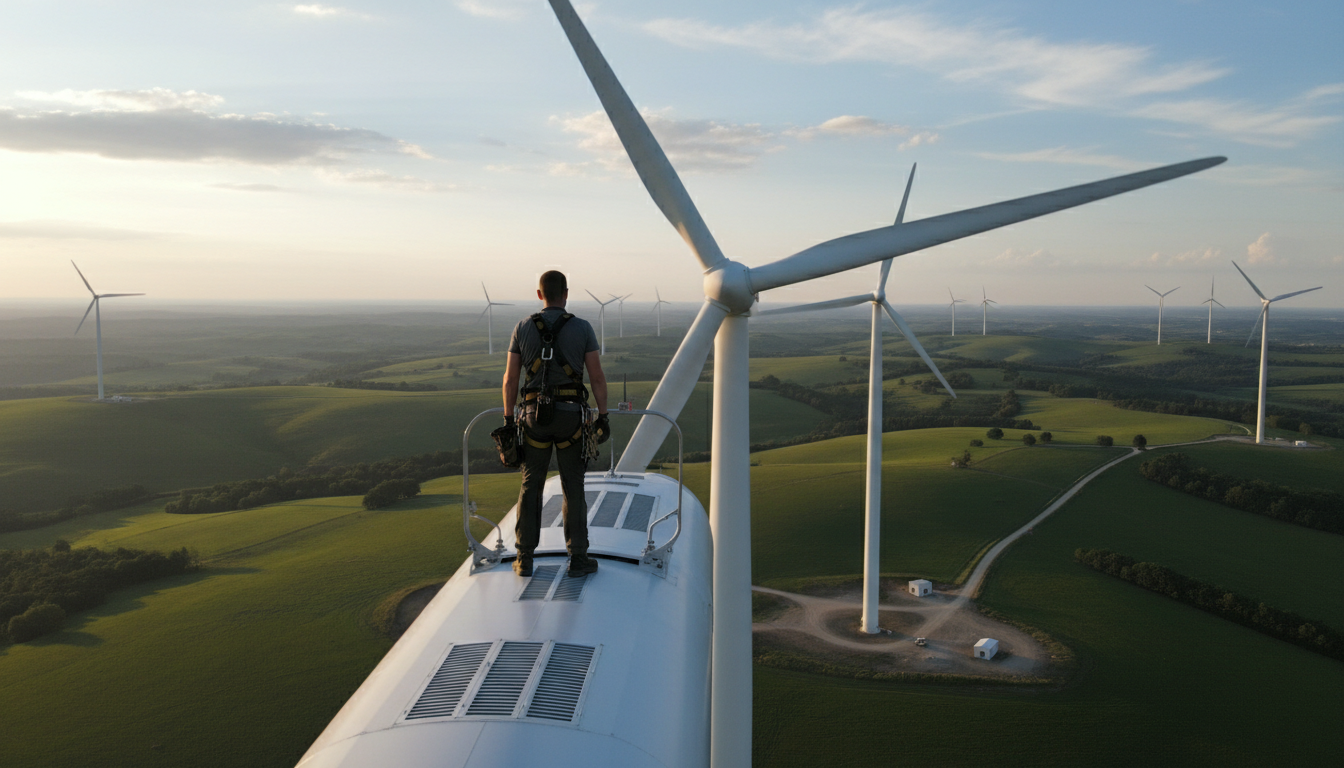
RenewAcad is a nationally and internationally certified training centre offering training, qualification and re-qualification courses in the field of renewable energy sources, predominantly courses for the wind and photovoltaic industry.
Discover more
Industry-leading certification pathways designed to meet the rigorous demands of the global energy sector.
See curriculum
GWO-certified training for onshore and offshore turbine technicians. GWO-certified training for onshore and offshore turbine technicians.
16 Courses
GWO-certified training for onshore and offshore turbine technicians.
28 Courses
GWO-certified training for onshore and offshore turbine technicians.
32 Courses
GWO-certified training for onshore and offshore turbine technicians.
53 Courses
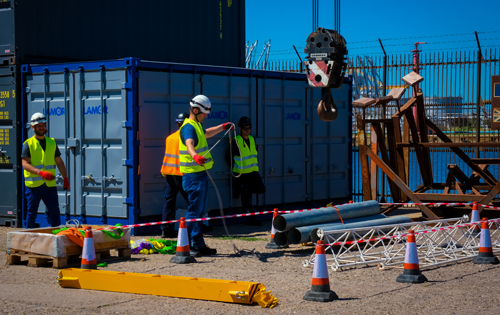
Aims and Objectives for the Slinger Signaller Module The aim of GWO’s Slinger Signaller Module is to enable the participant to support and care for themselves and others while working with slinger signalling in the wind industry by possessing the required knowledge, skills, and ability to conduct assigned tasks safely and efficiently. Upon successful completion of GWO’s Slinger Signaller Module training course, the participant will be able to work within the wind industry conducting slinging techniques and signalling during simple lifting operations, meaning lifts conducted based on a lifting plan or covering known hazards. Overall learning objectives The participants of the slinger signaller module will have the ability to: 1) On their own, take responsibility to attach and detach the load to and from the crane lifting attachment (Ability, intermediate level) 2) Take responsibility to initiate and direct the safe movement of the crane, including multiple slinger signallers during limited or blind lifts in both familiar and unfamiliar situations (Ability, intermediate level) 3) Take responsibility for their role and responsibilities during the lift (Ability, intermediate level) 4) On their own, take responsibility for visual pre- and post-inspection on lifting accessories and load (Ability, intermediate level) 5) Take responsibility for handling lifting accessories (Ability, intermediate level) 6) Act independently when taking responsibility for ensuring safe lift-off and lay down of the load (Ability, intermediate level) 7) Take responsibility for slinging various types of loads, based on weight, centre of gravity, shape, and size and to seek guidance when needed (Ability, intermediate level) 8) Take responsibility to carry out generic routine lifts in accordance with the lift plan independently and responsibly (Ability, intermediate level) 9) Take responsibility to comply with instructions/procedures set up by the employer to manage lifting and to seek guidance when needed (Ability, intermediate level) 10) Take responsibility to ensure that equipment is properly applied, maintained and that defects are reported (Ability, intermediate level)
16 [h]
€350*
+VAT
Book for Training
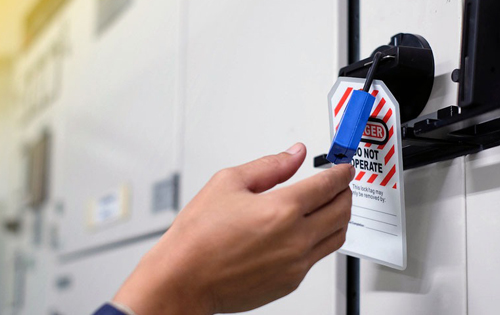
ENG: Aims and Objectives for the CoHE Basic Safety Module The aim of this module is to enable participants, through theoretical and practical training, to act safely while working in the vicinity of hazardous energies in the wind industry and be able to perform assigned tasks safely. After having successfully complete this CoHE Basic Safety module, the participants will have the ability to: 1) Solve the challenge of how to act safely while working in the vicinity of hazardous energies in the wind industry and will on their own initiative seek guidance when needed (Ability, basic level)
4 [h]
€350*
+VAT
Book for Training
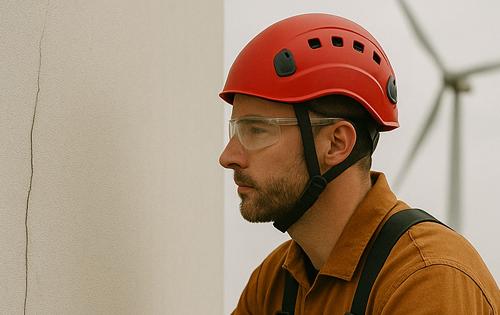
The purpose of this module is to enable participants, through theoretical and practical training, to perform detailed inspections of wind turbine towers and apply correct techniques for identifying and repairing defects. Participants will learn to recognize signs of damage in the towers and manage the repair process effectively, contributing to the maintenance of their performance and durability within the wind turbine industry.
12 [h]
€500*
+VAT
Book for Training
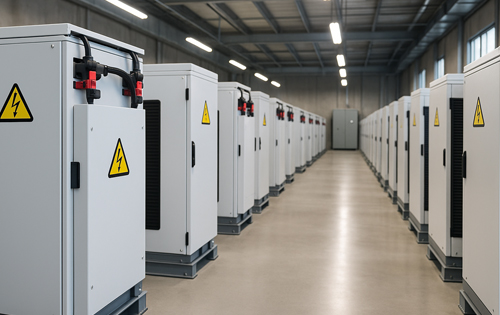
The Battery Storage Expert Programme covers the entire battery storage value chain, from the role of batteries to their constituent parts; from the battery value chain to the integration in power applications; from the impact on the electricity market to ground-breaking business models. Participants build the knowledge, the expert understanding, the technical and commercial insights and the human network to play a leading part in driving the global energy transition.
86h
€3750*
+VAT
Book for Training
This certificate explores the potential role and position of battery storage in the future European electricity industry, by shedding light on different applications of battery storage. For each of the four main applications of grid-scale, behind-the-meter, off-grid and mobility, you will learn about the most promising services of battery storage in the electricity system that has a large share of renewable electricity. You will discover why the development and deployment of battery storage has been slow, despite it being a promising solution, but also why the time has come for the electricity industry to make smart battery choices.
4h
€310*
+VAT
Book for Training
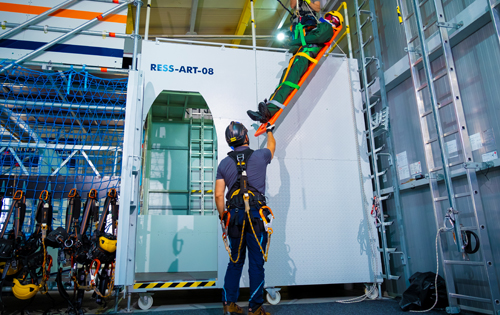
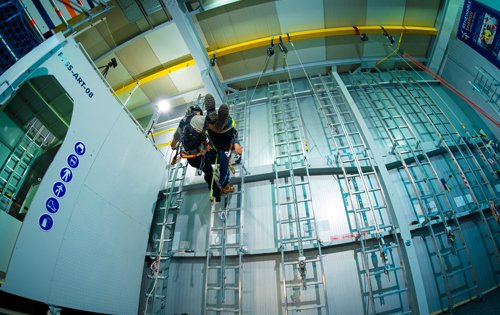
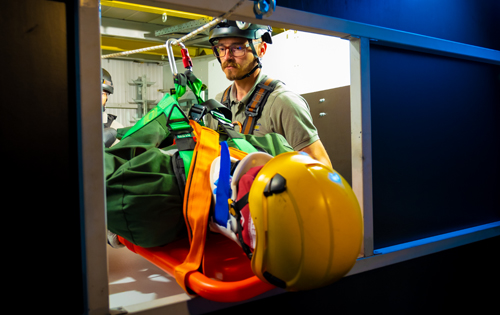
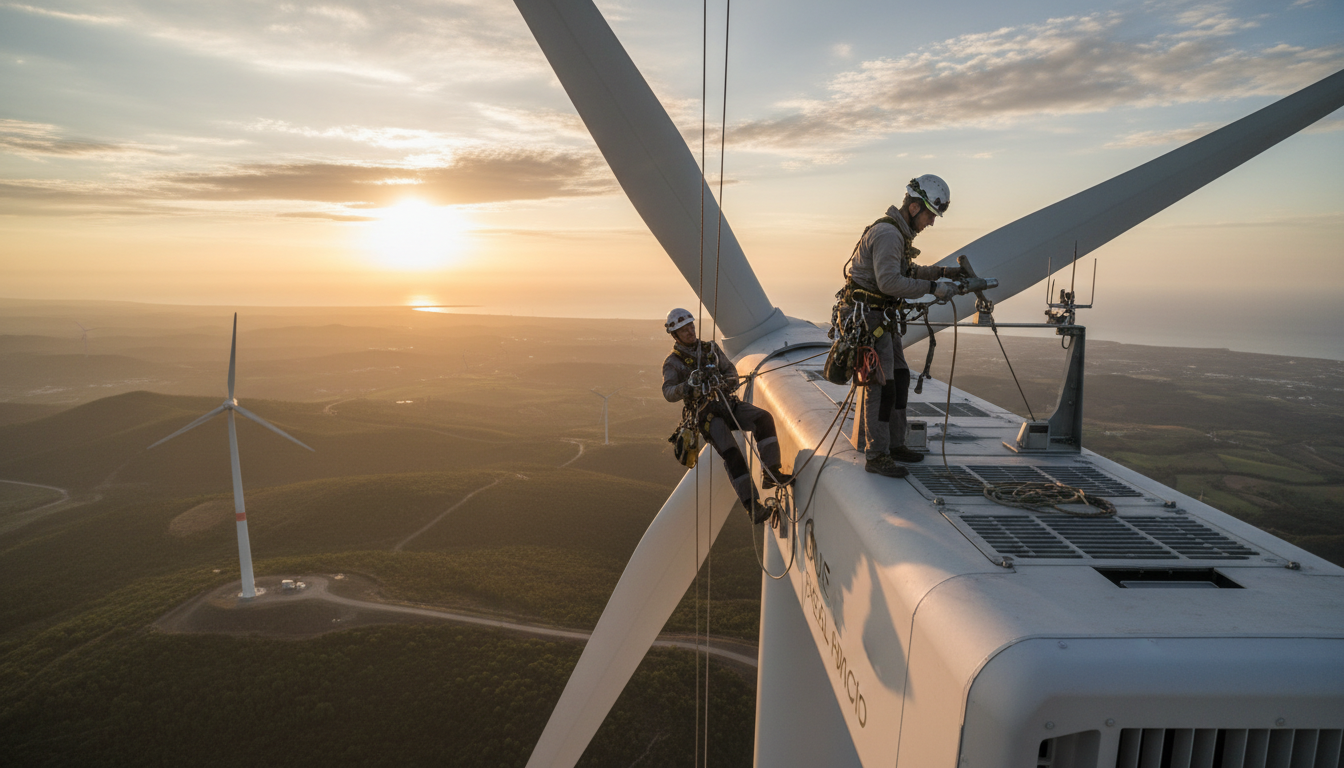
Upon completion of the Advance Rescue Training Standard, participants will be able to access and rescue an injured person from the hub and the nacelle, tower, and basement section of a wind turbine. These training modules can be delivered independently of one another or as stand-alone training.The GWO Advanced Rescue Training is divided into the following four modules:Module 1:Hub, Spinner and Inside Blade Rescue (HSIBR)Module 2:Nacelle, Tower, and Basement Rescue (NTBR)Module 3:Single Rescuer: Hub, Spinner and Inside Blade Rescue (SR:HSIBR)Module 4:Single Rescuer: Nacelle, Tower and Basement Rescue (SR:NTBR)
24 [h]
€670*
+VAT
Book for Training
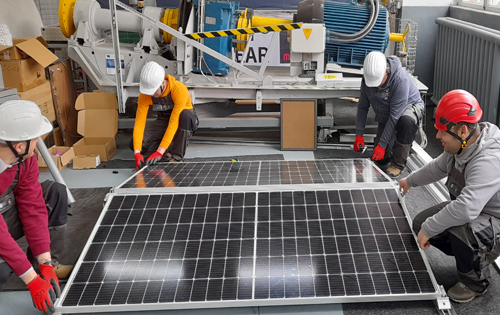
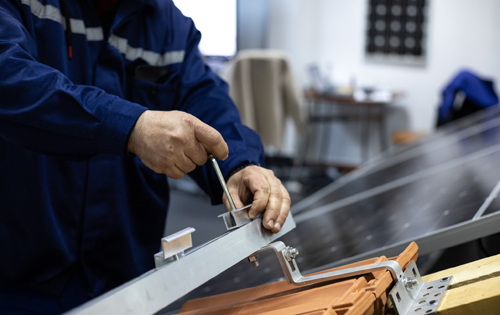
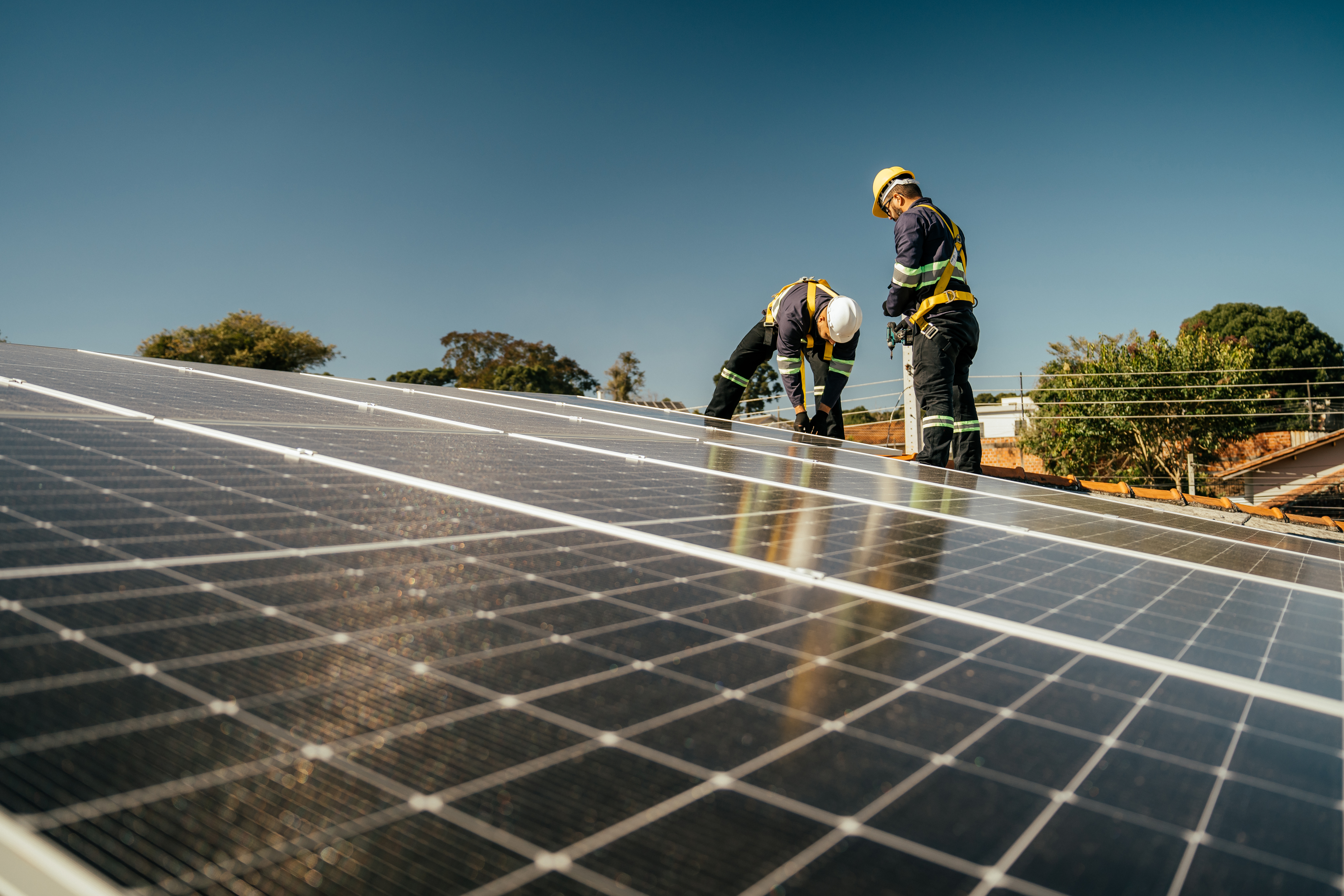
The installer for solar photovoltaic systems is responsible for installing, maintaining, and repairing the equipment and electrical systems necessary for converting solar energy into electricity. This activity involves careful examination of wiring plans and diagrams, using specialized equipment to connect and secure panels, adhering to safety standards and occupational health protection, as well as verifying installation compliance by testing circuit continuity and operating parameters. These operations aim to ensure optimal system efficiency and safe integration into the existing electrical grid. Course Objectives Through this course, participants will acquire the necessary skills for: Installing, maintaining, and repairing photovoltaic systems on various types of buildings and structures. Reading and interpreting technical plans and electrical diagrams. Connecting and testing equipment required for solar system operation. Adhering to safety standards and occupational health, including those for working at heights and handling electrical equipment. Skills Acquired » Reading and interpreting technical documentation specific to the photovoltaic field. » Installing and mounting photovoltaic panels and support structures. » Making electrical connections between system components. » Commissioning photovoltaic installations according to regulations and technical specifications. » Maintaining and repairing equipment in a solar photovoltaic system. » Applying occupational safety and fire protection standards. » Working safely at heights and following procedures for handling masses. Target Audience This course is aimed at those wishing to specialize in the installation and maintenance of photovoltaic systems, including electricians, technicians in the energy sector, or those seeking career transition into this rapidly expanding industry. Admission Requirements: » Minimum educational level: Upper secondary education (first two years of high school). » Medical fitness for working at heights. » Prior training in the electrical field is required for participants in the training program. Course Structure Total Duration: 720 hours (240 hours theory + 480 hours practical) Theoretical Module (basic electricity, safety and occupational health, photovoltaic installation planning) Practical Module (assembly of support structures, installation of panels, connection and testing of photovoltaic systems) Equipment and Safety Participants will learn to use specific equipment including: Tools for electrical measurements (multimeter, clamp meter). Height safety systems (harnesses, lanyards, helmets). Tools and devices for making electrical connections. Fire extinguishing equipment and first aid kits.
720 hh
€400*
+VAT
Book for Training
This certificate discusses the need of power converters for battery applications. It dives into the different types of power converters and explains the underlying principles. The use of power converters is illustrated via a number of applications. The fundamental concept of efficiency is discussed.
8h
€640*
+VAT
Book for Training
Estimating energy production and losses of a photovoltaic power plant up to 1 MWp using PVSyst. Module 1 - Basic Elements -Latitude, longitude, and sun movement throughout seasons. -Definition, impact, and calculation of tilt and azimuth angles. Module 2 - Preliminary Design and Excel Calculations -Typical project lifecycle, evaluation of electricity bills, use of solar radiation maps and Google maps, and estimation of plant capacity. -Using Excel to calculate number of modules and inverters, selection of modules and inverters, and sizing of strings. -Preliminary requirements for site visits, studying obstacles and electrical diagrams, creating rough sketches of the site and single-line diagrams, unforeseen scenarios. Module 3 - Understanding Energy Losses in PVSyst / Case Study CEF 50 kWp -Overview of PVSyst characteristics and functionalities. -Creating a new site, steps involved in using the software, and generating a report. -Definition, calculation, and application of all losses, understanding the loss diagram (Sankey diagram). Module 4 - 3D Shading Scene Design in PVSyst / Case Study CEF 1 MWp -Creating a 3D shading scene, minimizing shading losses, visualizing shade animations throughout a day and analysis, report generation, and understanding shading effects. Module 5 - Sub-Array Design in PVSyst / Case Study CEF 200 kWp -Defining sub-arrays, designing a detailed sub-array system, and analyzing the report. Module 6 - Carport Design and Sales Proposal / Case Study CEF 400 kWp -Creating a carport project in PVSyst, detailed project with losses, 3D modeling and shade analysis, report generation and analysis. -Content of a sales proposal using a PVSyst report within a sales proposal, along with a template. Module 7 - Additional Functions of PVSyst -Adding new modules and inverters, exporting and importing projects, compatibility with other software, adding custom logos, and more.
8h
€1000*
+VAT
Book for Training
This certificate examines the challenges faced by the energy system to accommodate the upcoming changes and how batteries can promote and accelerate this transition looking into the drivers and barriers for relevant business models implementation.
7h
€590*
+VAT
Book for Training
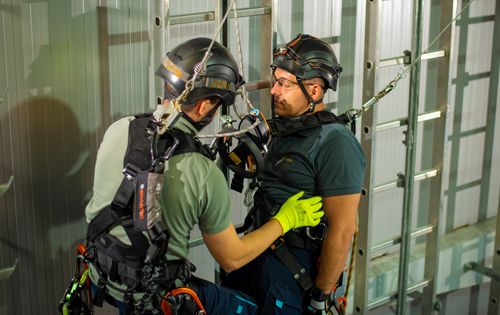
Aims and Objectives of the BST Working at Heights & Manual Handling Module The aim of this module is to enable the participants, through theoretical and practical training, to use basic personal protective equipment, work safely at heights and perform comprehensive basic rescue from heights in a wind turbine environment. Furthermore, this module also aims to encourage positive manual handling and ergonomic behavior and enable participants to perform manual handling tasks in a safe manner.Overall learning objective for the module:After having successfully completed this BST Working at Heights and Manual Handling Module, the participants have the ability to act safely and responsibly and apply good manual handling techniques when working at heights and performing comprehensive basic rescue from heights. (Ability, intermediate level).
16 [h]
€400*
+VAT
Book for Training
This mini-certificate provides a deep yet simple explanation of the operational principles of a rechargeable battery. The certification spotlights the importance and discusses the fundamentals of the ‘electrochemical cell’ which is the heart of any battery system independent of the storage size. A direct link is set forth between the chemical nature of the cell components and the storage properties of interest such as ‘electromotive force’ and gravimetric & volumetric capacities. Specific attention is directed towards lithium-ion batteries by presenting more details about the materials of choice for the anode/cathode together with their synthesis methods.
5h
€490*
+VAT
Book for Training
Duration: 12 hours Validity: 24 months The Solar Technical Installation (S-TTI) module enables participants to safely plan, prepare, and perform the installation of photovoltaic (PV) systems in accordance with manufacturer requirements and applicable safety standards. It combines theoretical instruction with extensive practical exercises on mechanical and electrical installation tasks.Participants will learn how to:– Interpret PV installation drawings, specifications, and method statements;– Plan installation activities including logistics, tools, and risk assessment;– Assemble substructures, support frames, and racking systems according to torque and alignment specifications;– Mount PV modules securely, ensuring correct positioning, orientation, and spacing;– Connect DC strings and verify polarity, insulation resistance, and continuity tests;– Route and fix cables correctly using UV-resistant clips and strain relief methods;– Apply grounding, labeling, and documentation according to solar installation standards;– Perform final inspection and quality checks prior to system commissioning.Objective:Upon completion, participants will be able to carry out solar PV installation safely and efficiently, ensuring compliance with GWO, IEC, and manufacturer standards, while contributing to the overall quality and reliability of the solar installation.

12h
€350*
+VAT
Book for Training
Duration: 4 hours Validity: 24 months The Solar First Aid Awareness (S-FAA) module provides participants with the essential knowledge to recognise, respond to, and support first aid actions in a solar work environment. It is intended for all solar personnel who need a general understanding of emergency response but who are not required to perform full first aid interventions.Participants will learn how to:– Recognise emergency situations and activate the emergency response system;– Call for professional help and provide accurate information to rescue teams;– Assist qualified first aiders during incidents, following their instructions;– Support colleagues safely while maintaining own safety using basic PPE;– Understand the main risks in solar installations related to heat, electrical shock, and falls;– Maintain calm and communicate clearly during emergency scenarios;– Demonstrate awareness of limitations and the importance of professional medical assistance.Objective:Upon completion, participants will be able to act calmly and effectively in emergency situations, provide initial assistance and communicate correctly until professional help arrives, ensuring personal safety and that of others.
4h
€160*
+VAT
Book for Training
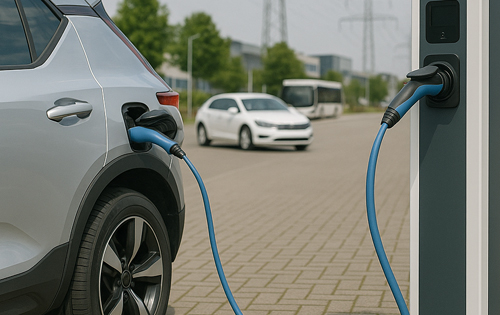
This mini-certificate provides an understanding on how the future transportation sector will impact the energy system both by putting stress on the electricity grid and by delivering valuable new services to the grid. Participants learn to make a realistic estimation of when our mobility system could go electric and which obstacles need to be tackled first.
6h
€540*
+VAT
Book for Training
This certificate empowers to expertly assess the challenges, the main drivers and the business opportunities of a changing energy system at different levels of the market. Participants will get a perspective on policy and regulation frameworks as a crucial part of any investment decision and strategy, and will discover real business examples from leading companies that are ground-breaking in their sector.
11h
€740*
+VAT
Book for Training
This certificate has been designed to give participants in-depth knowledge of the exciting potential of battery storage solutions, and their applications and benefits across various areas of the electricity grid. Also, this certification provides a thorough understanding of practical applications, including electric vehicles, energy storage systems (ESS) on grid and at home, industrial products and local energy systems. Furthermore, this certification examines business models and investment opportunities related to battery storage.
13h
€990*
+VAT
Book for Training
Aims and objectives for the Hub, Spiner and Inside Hub Rescue Module (HSIBR Module) The aim of this module is to enable participants, through theoretical and practical training, to perform rescue operations, in a WTG hub, spinner and inside the blade by using industry standard rescue equipment, methods and techniques, exceeding those of GWO Working at Height. After having successfully complete this HSIBR Module, the participants will have the ability to 1) Take responsibility to determine rescue and evacuation strategy, performing rescue operations in a WTG hub, spinner and inside the blade (Knowledge, intermediate level). 2) Explain the concepts of lifting angle, angle factor and deviation considering common risks of hazardous energies and common hazards (Ability, intermediate level).
8 [h]
€250*
+VAT
Book for Training
Aims and Objectives of the CoHE Pressure Fluid Safety Module The aim of GWO’s CoHE Pressure Fluid Safety training module is to enable the participants to support and care for themselves and others while working with and in the vicinity of pressure fluids in the wind industry and to perform assigned tasks safely and efficiently. Upon successful completion of GWO’s CoHE Pressure Fluid Safety Module, the participants will be able to reduce the associated risks to and work safely with pressure fluid tasks in the wind industry by being able to select the correct and required PPE for working with hydraulic fluids and fluids under pressure, using safe work practices and establishing a safe work condition when working with and in the vicinity of pressure fluids in the wind industry. Overall learning objectives for the CoHE Pressure Fluid Safety Module, the participants can: · Take responsibility for their own and others safety while working with and in the vicinity of pressure fluids in the wind industry (Ability, intermediate level) · Take responsibility for correctly completing a simple permit to work from beginning to end as the person responsible for establishing a safe work condition (Ability, intermediate level)
3 [h]
€360*
+VAT
Book for Training
Aims and Objectives of the BST Working at Heights Module The aim of this module is to enable the participants, through theoretical and practical training, to use basic personal protective equipment, work safety at height and perform comprehensive basic rescue from height in a remote wind turbine environment. After having successfully completed this BST Working at Heights Module, the participants have the ability to act safely and responsibly when using basic personal protective equipment, working at heights and performing comprehensive basic rescue from heights in a remote wind turbine environment (Ability, intermediate level).
24 [h]
€455*
+VAT
Book for Training
We provide government bodies and energy conglomerates with customized training ecosystems, large-scale workforce development, and accreditation consulting.
Discover all partners
See more
19.06.2026
Read the article
Constanta, 3 March 2026 – RenewAcad announced today that they will begin work on a skills development program under the “Gender and Economic Inclusion Technical Assistance Framework – Access to Skills and Employment”, in partnership with Scatec, Defic and the European Bank for Recons
02.03.2026
Read the article
RenewAcad, the largest network of renewable energy training centres in South-Eastern Europe, together with Rezolv Energy, today opened a new training centre in Buzau County, dedicated to preparing specialists for the renewable energy industry. The event also marks the launch of the first groups of t

02.12.2025
Read the article
Please provide your contact details and a course coordinator will get in touch to discuss the courses you need and help you reach your career goals.