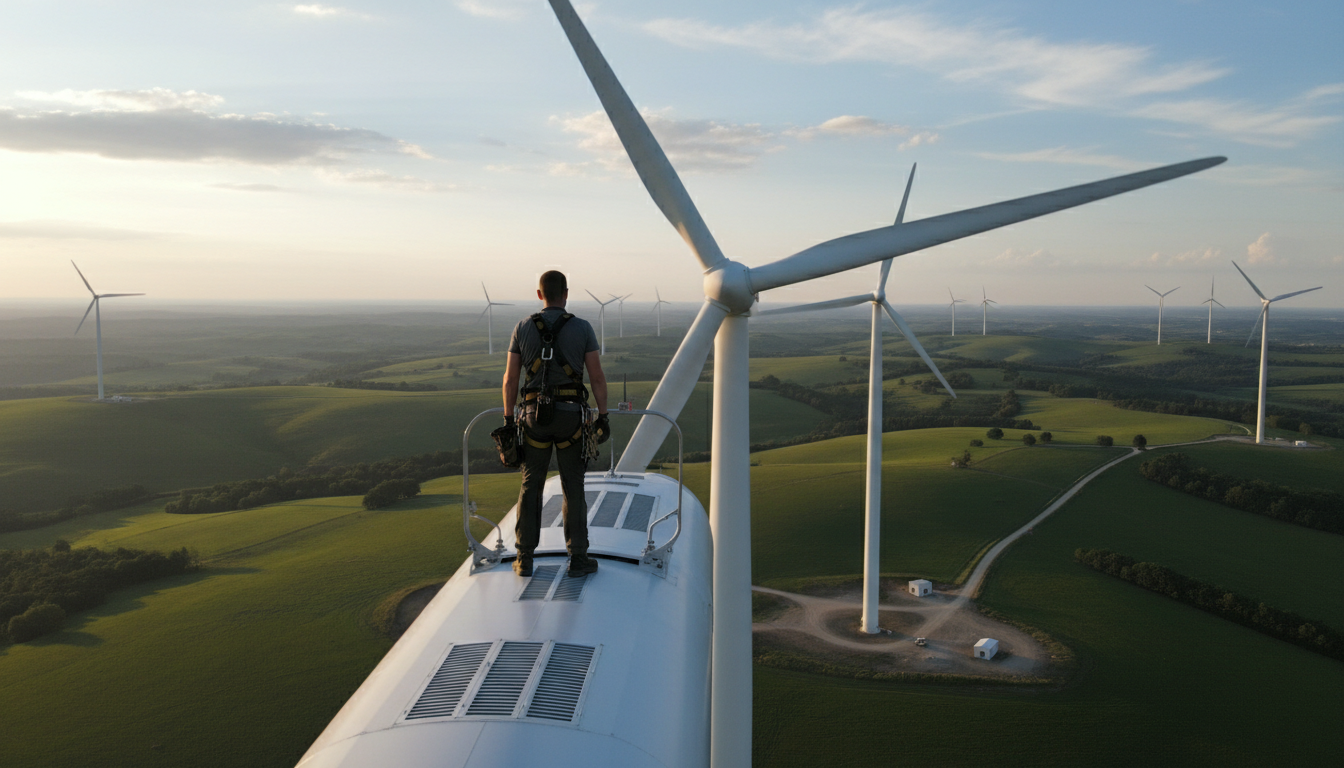
The largest Network of Renewable Energy Training Centres in South-Eastern Europe
RenewAcad is a nationally and internationally certified training centre offering training, qualification and re-qualification courses in the field of renewable energy sources, predominantly courses for the wind and photovoltaic industry.
Discover more
Industry-leading certification pathways designed to meet the rigorous demands of the global energy sector.
See curriculum
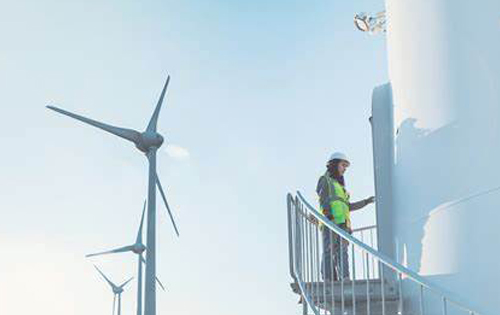
GWO-certified training for onshore and offshore turbine technicians. GWO-certified training for onshore and offshore turbine technicians.
16 Courses
GWO-certified training for onshore and offshore turbine technicians.
28 Courses
GWO-certified training for onshore and offshore turbine technicians.
32 Courses
GWO-certified training for onshore and offshore turbine technicians.
53 Courses
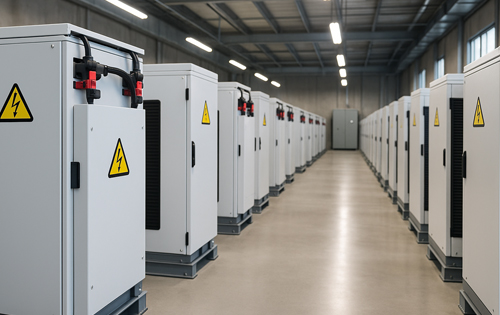
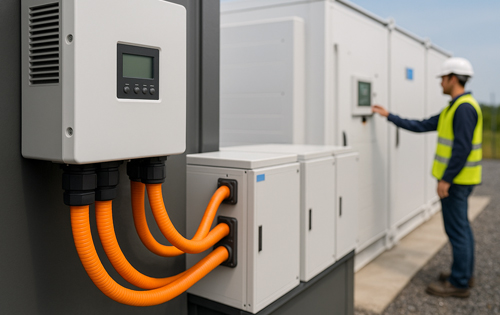
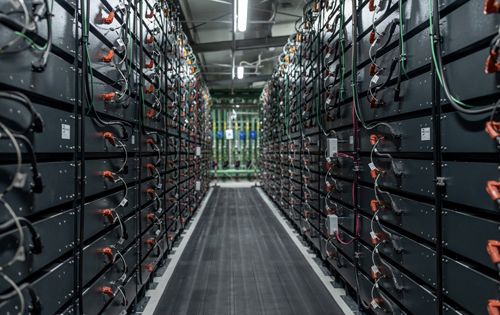
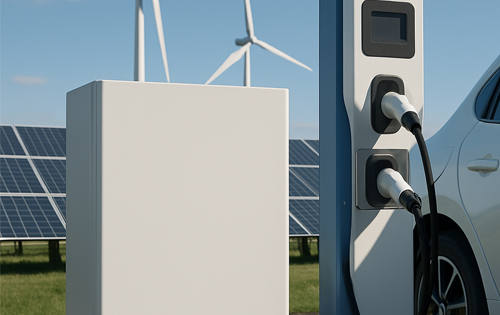
This certificate has been designed to give participants in-depth knowledge of the exciting potential of battery storage solutions, and their applications and benefits across various areas of the electricity grid. Also, this certification provides a thorough understanding of practical applications, including electric vehicles, energy storage systems (ESS) on grid and at home, industrial products and local energy systems. Furthermore, this certification examines business models and investment opportunities related to battery storage.
13h
€990*
+VAT
Book for Training
This certificate discusses the need of power converters for battery applications. It dives into the different types of power converters and explains the underlying principles. The use of power converters is illustrated via a number of applications. The fundamental concept of efficiency is discussed.
8h
€640*
+VAT
Book for Training
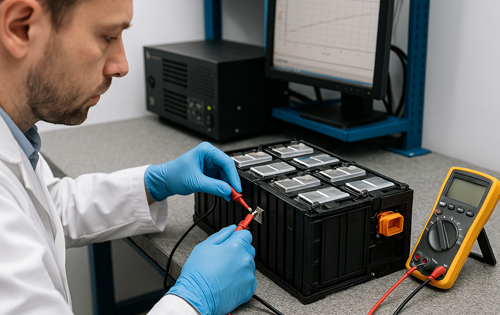
This mini-certificate discusses different methods for battery testing. The importance of testing, related standards, needed testing infrastructure and analysis tools are individually tackled. This series also highlights how the output of battery testing is viable for battery modelling that supports the battery use phase and can possibly be implemented on battery management systems.
5h
€490*
+VAT
Book for Training
The Battery Storage Expert Programme covers the entire battery storage value chain, from the role of batteries to their constituent parts; from the battery value chain to the integration in power applications; from the impact on the electricity market to ground-breaking business models. Participants build the knowledge, the expert understanding, the technical and commercial insights and the human network to play a leading part in driving the global energy transition.
86h
€3750*
+VAT
Book for Training
Aims and Objectives of Wind Limited Access Module Training in accordance with this Wind Limited Access Standard will enable participants to behave in a manner whereby they are not a danger to themselves or others during supervised visits to onshore assets, and with the completion of both modules, during transfers and visits to functioning onshore and offshore assets. This standard does not provide participants with the skills or knowledge to safely work in WTG environments or to participate in supervised visits to WTG assets where there are increased safety risks, for example faulty or under construction.
8 [h]
€350*
+VAT
Book for Training
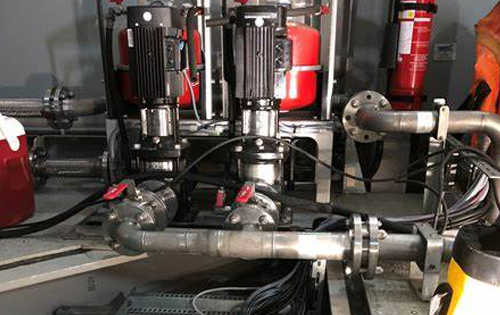
Aims and Objectives of the CoHE Pressure Fluid Safety Module The aim of GWO’s CoHE Pressure Fluid Safety training module is to enable the participants to support and care for themselves and others while working with and in the vicinity of pressure fluids in the wind industry and to perform assigned tasks safely and efficiently. Upon successful completion of GWO’s CoHE Pressure Fluid Safety Module, the participants will be able to reduce the associated risks to and work safely with pressure fluid tasks in the wind industry by being able to select the correct and required PPE for working with hydraulic fluids and fluids under pressure, using safe work practices and establishing a safe work condition when working with and in the vicinity of pressure fluids in the wind industry. Overall learning objectives for the CoHE Pressure Fluid Safety Module, the participants can: · Take responsibility for their own and others safety while working with and in the vicinity of pressure fluids in the wind industry (Ability, intermediate level) · Take responsibility for correctly completing a simple permit to work from beginning to end as the person responsible for establishing a safe work condition (Ability, intermediate level)
3 [h]
€360*
+VAT
Book for Training
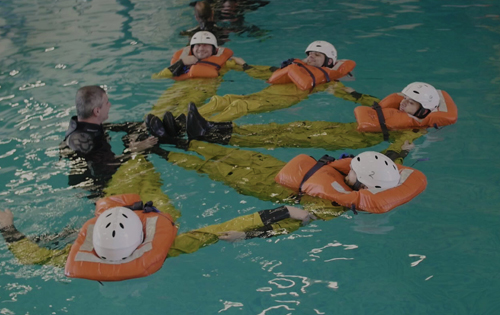
Aims and Objectives of the BST Sea Survival Module The aims of this BST Sea Survival course are to give, by theoretical and practical training, participants the ability to act safely and responsibly and to take the correct preventive actions in all aspects of offshore operations from shore to installation vessel (or WTG) and vice versa. This is both during normal operations and in an offshore wind energy environment emergency. The overall learning objective: After successfully having completed this BST Sea Survival Module, the participants have the ability to act safely and responsibly in an offshore work environment and to take responsibility for their own and fellow employees’ safety in work situations as well as in emergency situations (Ability, intermediate level)
8 [h]
€470*
+VAT
Book for Training
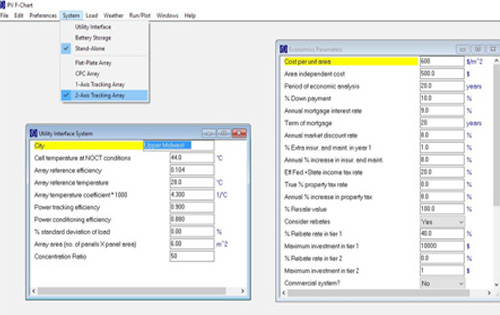
Improving PVSyst knowledge through simulation of grid-connected utility-scale PV systems with case studies up to 20 MWp. Module 1 - PV Systems with Trackers / Case Study 5 MWp -Defining and constraints of a PV system with trackers, shading analysis in PVSyst, and studying the report. Module 2 - Optimizations / Case Study 1 MWp -Functionality of optimization tools and unlimited tables, simultaneous simulation for different tilt angles and row distances. Module 3 - Bifacial PV Modules / Case Study 10 MWp -Designing a PV system with bifacial modules in PVSyst, albedo values, and other aspects. Defining, calculating, and applying all losses, engineering logic behind the rules, understanding the loss diagram (Sankey diagram). Module 4 - Energy Management in PVSyst -P50 and P90 reports -Limiting exported power to the grid -Power factor Module 5 - String Formation of PV Modules -Creating and designing PVSyst simulations using string formation feature with individual modules Module 6 - Horizon Diagram / Case Study 2 MWp -Creating and designing far shading simulations using Horizon Import feature -Proposal content using a PVSyst report within a sales proposal, along with a template Module 7 - Financial Modeling / Case Study 1 MWp -Overview of financial modeling, preparing a materials list and cost sheet, introducing usage tariff and export tariff, cash flow diagrams, and report generation. Module 8 - Interval Data / Case Study 1 MWp -Defining and extracting interval data along with generating and analyzing reports. Module 9 - Fillzone Function and Contour Mapping -Using the Fillzone function / Case Study 25 MWp -Simulation with contours and on uneven terrains / Case Study 30 MWp Module 10 - Recapitulation / Case Study 21 MWp -Summarizing all concepts in a single case study
8h
€1000*
+VAT
Book for Training
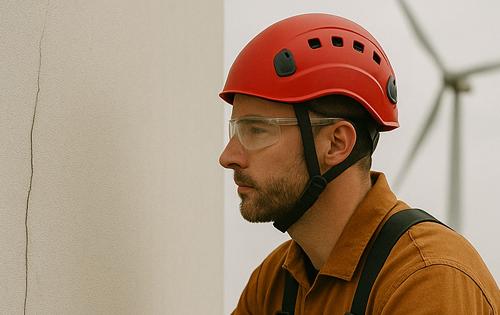
The purpose of this module is to enable participants, through theoretical and practical training, to perform detailed inspections of wind turbine towers and apply correct techniques for identifying and repairing defects. Participants will learn to recognize signs of damage in the towers and manage the repair process effectively, contributing to the maintenance of their performance and durability within the wind turbine industry.
12 [h]
€500*
+VAT
Book for Training
This certificate introduces the most promising battery storage technologies and how they can affect the future of the transportation and power sectors.
5h
€330*
+VAT
Book for Training
Duration: 4 hours Validity: 24 months The Solar First Aid Awareness (S-FAA) module provides participants with the essential knowledge to recognise, respond to, and support first aid actions in a solar work environment. It is intended for all solar personnel who need a general understanding of emergency response but who are not required to perform full first aid interventions.Participants will learn how to:– Recognise emergency situations and activate the emergency response system;– Call for professional help and provide accurate information to rescue teams;– Assist qualified first aiders during incidents, following their instructions;– Support colleagues safely while maintaining own safety using basic PPE;– Understand the main risks in solar installations related to heat, electrical shock, and falls;– Maintain calm and communicate clearly during emergency scenarios;– Demonstrate awareness of limitations and the importance of professional medical assistance.Objective:Upon completion, participants will be able to act calmly and effectively in emergency situations, provide initial assistance and communicate correctly until professional help arrives, ensuring personal safety and that of others.
4h
€160*
+VAT
Book for Training
This mini-certificate provides an understanding on how the future transportation sector will impact the energy system both by putting stress on the electricity grid and by delivering valuable new services to the grid. Participants learn to make a realistic estimation of when our mobility system could go electric and which obstacles need to be tackled first.
6h
€540*
+VAT
Book for Training
Aims and Objectives of COHE Module The GWO CoHE Standard will enable participants to manage the risks related to hazardous energies in thewind industry and act safely when in the vicinity of hazardous energies or when working on systems andequipment containing hazardous energies.
24 [h]
€1400*
+VAT
Book for Training
Estimating energy production and losses of a photovoltaic power plant up to 1 MWp using PVSyst. Module 1 - Basic Elements -Latitude, longitude, and sun movement throughout seasons. -Definition, impact, and calculation of tilt and azimuth angles. Module 2 - Preliminary Design and Excel Calculations -Typical project lifecycle, evaluation of electricity bills, use of solar radiation maps and Google maps, and estimation of plant capacity. -Using Excel to calculate number of modules and inverters, selection of modules and inverters, and sizing of strings. -Preliminary requirements for site visits, studying obstacles and electrical diagrams, creating rough sketches of the site and single-line diagrams, unforeseen scenarios. Module 3 - Understanding Energy Losses in PVSyst / Case Study CEF 50 kWp -Overview of PVSyst characteristics and functionalities. -Creating a new site, steps involved in using the software, and generating a report. -Definition, calculation, and application of all losses, understanding the loss diagram (Sankey diagram). Module 4 - 3D Shading Scene Design in PVSyst / Case Study CEF 1 MWp -Creating a 3D shading scene, minimizing shading losses, visualizing shade animations throughout a day and analysis, report generation, and understanding shading effects. Module 5 - Sub-Array Design in PVSyst / Case Study CEF 200 kWp -Defining sub-arrays, designing a detailed sub-array system, and analyzing the report. Module 6 - Carport Design and Sales Proposal / Case Study CEF 400 kWp -Creating a carport project in PVSyst, detailed project with losses, 3D modeling and shade analysis, report generation and analysis. -Content of a sales proposal using a PVSyst report within a sales proposal, along with a template. Module 7 - Additional Functions of PVSyst -Adding new modules and inverters, exporting and importing projects, compatibility with other software, adding custom logos, and more.
8h
€1000*
+VAT
Book for Training
Aims and Objectives for the EFA Module The aim of the module is to enable the participants to support and care for others working in the industry and to provide ongoing care to an ill or injured casualty over a short period of time while waiting for professional emergency rescue teams to arrive. Overall learning objectives for the EFA module: 1) Participants can take responsibility for administering safe, effective, and immediate lifesaving and enhanced first aid measures in an emergency in a wind turbine generator (WTG) environment (Ability, intermediate level) 2) Participants can act independently in giving assistance in remote areas using advanced emergency equipment and medical teleconsultation (Ability, intermediate level)
24 [h]
€500*
+VAT
Book for Training
The competency assessment for the 720-hour Qualification course in photovoltaic (PV) system installation involves the process of verifying and certifying the knowledge, skills, and abilities required in this field. The course focuses on the installation, maintenance, and repair of photovoltaic systems, ensuring compliance with current standards and regulations. Assessment Criteria: Technical Knowledge: Demonstrating knowledge of electricity, solar energy, and the operation of photovoltaic systems, including their components (panels, inverters, etc.). Practical Skills: Verifying the ability to correctly and safely install photovoltaic panels and other system components. Problem-Solving Skills: The ability to identify and troubleshoot system faults in photovoltaic systems. Knowledge of Regulations: Adherence to applicable legal standards and regulations concerning the installation of photovoltaic systems.
22h
€400*
+VAT
Book for Training
Duration: 8 hours Validity: 24 months The Solar Technical Electrical (S-TTE) module provides participants with the technical knowledge and practical skills to perform electrical installation, connection, and verification of photovoltaic (PV) systems safely and in accordance with GWO and IEC standards. It includes theoretical learning and hands-on practice focusing on DC and AC circuits, measurement, and troubleshooting.Participants will learn how to:– Understand and apply electrical principles of DC and AC circuits in PV installations;– Identify components of PV systems: inverters, junction boxes, combiner boxes, and protective devices;– Perform DC wiring including polarity checks, insulation resistance, and continuity verification;– Connect AC circuits safely to the grid or local distribution board;– Apply grounding, bonding, and equipotential connection methods correctly;– Test and document voltage, current, and insulation resistance using appropriate measuring instruments;– Verify protective measures (RCDs, fuses, breakers) according to standards;– Identify, analyse, and correct common electrical installation faults safely;– Prepare commissioning reports and verify system readiness before energisation.Objective:Upon completion, participants will be able to perform electrical installation and verification tasks in solar PV systems safely and efficiently, ensuring technical quality and compliance with GWO and international standards.
8h
€300*
+VAT
Book for Training
This certificate focuses on real-life applications that will contribute to achieving in practice a low-emission, sustainable future. It gives a deep understanding of battery storage applications across the electric grid, behind-the-meter, storage for electrical mobility, and for industrial applications.
12h
€990*
+VAT
Book for Training
Aims and Objectives of the BST Sea Survival Module The aims of this BST Sea Survival course are to give, by theoretical and practical training, participants the ability to act safely and responsibly and to take the correct preventive actions in all aspects of offshore operations from shore to installation vessel (or WTG) and vice versa. This is both during normal operations and in an offshore wind energy environment emergency. The overall learning objective: After successfully having completed this BST Sea Survival Module, the participants have the ability to act safely and responsibly in an offshore work environment and to take responsibility for their own and fellow employees’ safety in work situations as well as in emergency situations (Ability, intermediate level)
8 [h]
€500*
+VAT
Book for Training
This mini-certificate explains how a lithium-ion cell can be designed, sized, and produced for a specific capacity and energy. The key steps in the selection and production of the main components of the cell, i.e. electrodes, separator, and electrolyte, are discussed. The slurry formulation, mixing, coating, drying, calendaring, cutting, stacking, electrolyte formulation/injection, sealing/packing, and formation cycles are detailed both in terms of machineries and the processing parameters.
5h
€490*
+VAT
Book for Training
ENG: Aims and Objectives for the CoHE Basic Safety Module The aim of this module is to enable participants, through theoretical and practical training, to act safely while working in the vicinity of hazardous energies in the wind industry and be able to perform assigned tasks safely. After having successfully complete this CoHE Basic Safety module, the participants will have the ability to: 1) Solve the challenge of how to act safely while working in the vicinity of hazardous energies in the wind industry and will on their own initiative seek guidance when needed (Ability, basic level)
4 [h]
€350*
+VAT
Book for Training
We provide government bodies and energy conglomerates with customized training ecosystems, large-scale workforce development, and accreditation consulting.
Discover all partners
See more
19.06.2026
Read the article
Constanta, 3 March 2026 – RenewAcad announced today that they will begin work on a skills development program under the “Gender and Economic Inclusion Technical Assistance Framework – Access to Skills and Employment”, in partnership with Scatec, Defic and the European Bank for Recons
02.03.2026
Read the article
RenewAcad, the largest network of renewable energy training centres in South-Eastern Europe, together with Rezolv Energy, today opened a new training centre in Buzau County, dedicated to preparing specialists for the renewable energy industry. The event also marks the launch of the first groups of t
02.12.2025
Read the article
Please provide your contact details and a course coordinator will get in touch to discuss the courses you need and help you reach your career goals.